In this dialogue
How do I know whether I can hit?
Henrik, when I face someone in partner practice, I don't know whether I can hit from where I'm standing. How do I know if I need another step?

In Germany, say “Mensur” and many people immediately think of student fraternity fencing. In our training hall, Mensur simply means: how far are you from the other person? For training, we focus on three distances.
- Wide distance — weite Mensur. A normal step forward still isn't enough to hit directly. You also have to stretch out quite a bit, for example with a lunge, to reach your partner.
- Middle distance — mittlere Mensur. One step and an ordinary descending cut, an Oberhau, are enough to hit directly. Many fencers like to stay at this distance. You can attack quickly from here and still have room to move out of the way.
- Close distance — nahe Mensur. You can hit each other directly. In other blade-based martial arts, you sometimes hear this called the “Kill Zone”. Things happen quickly here. Fists, elbows, kicks and throws also come into play at this distance. The throws are part of what we call Ringen — wrestling.
How do I practise the right distance?
How do I get a feel for what's possible from my distance?
At first, judging your reach is difficult. It's a bit like football: no coach in the world can explain exactly how hard you need to kick the ball to make it land where you want. You practise, and eventually you develop a reliable feel for it. Fencing is the same. You work on distance through exercises and games until you can almost feel it. Hard to believe, perhaps, but distance, footwork and steps matter more in fencing than the most impressive sword swinging.
First distance exercise · One leads, one follows
Okay, let's try it. What's the first exercise you'd give the two of us?
Take your training sword and stand with your right foot forward. Your partner does the same. Then cross your blades so that they touch roughly where the forward third of each blade begins. Measured from the crossguard towards the point, that's about two-thirds of the blade. For this exercise, that puts you in middle distance.
Now one of you leads, like in dancing. We often call the leader the Magister, because they help you do the exercise correctly. They choose the direction: forwards, backwards or sideways. Your job is to keep the distance between you the same. Ideally, the blades keep touching at roughly the same place.
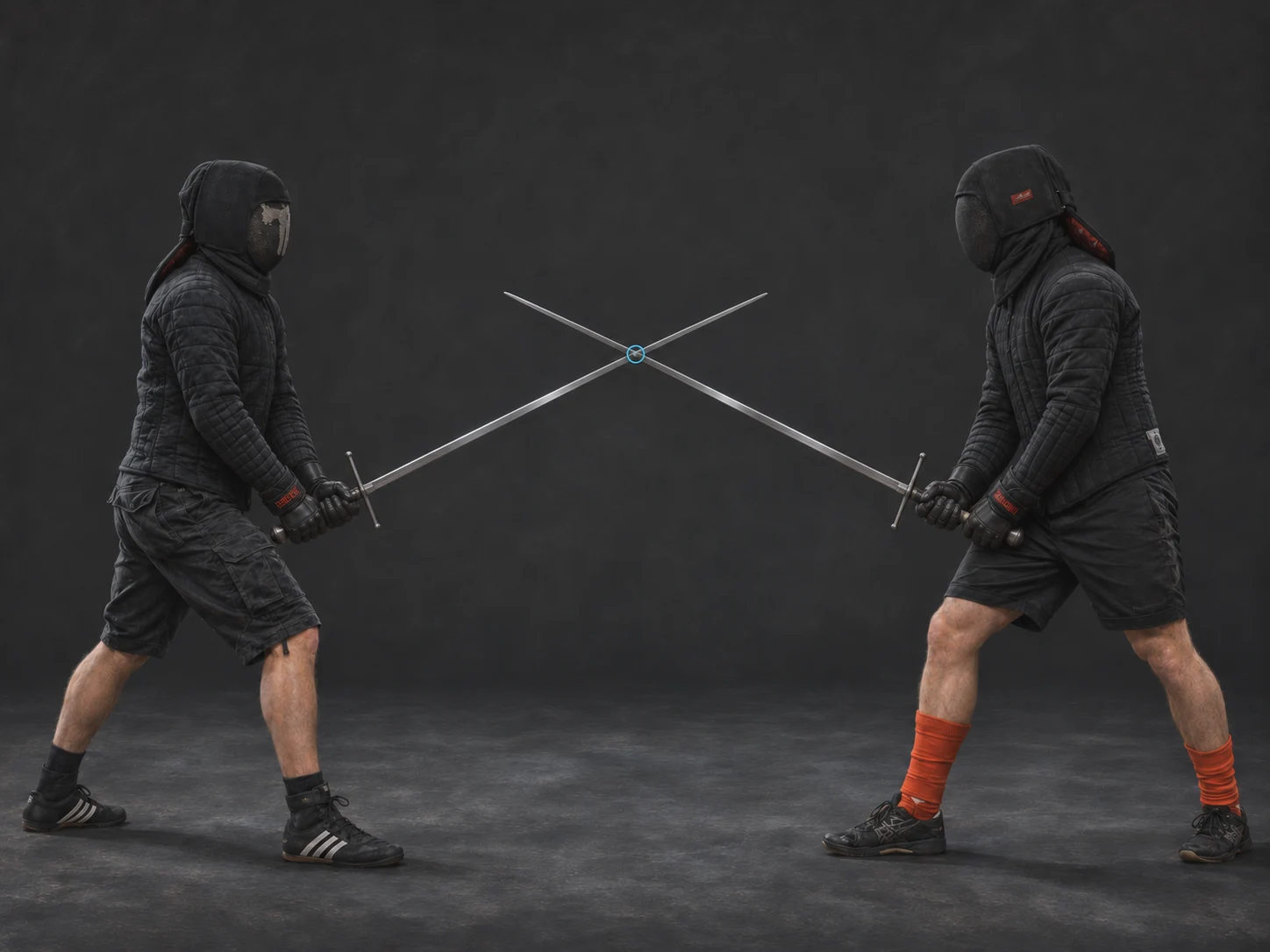
The blue ring marks contact about two-thirds along both blades, measured from the crossguard towards the point.
How do I follow the Magister?
What do I do when the Magister moves towards me?
Move back and keep the distance. The Magister sets a pace you can follow. When they move back, follow promptly so the blades stay in contact. When they move sideways, adjust your movement to keep the distance the same. The contact point tells you whether you're getting too close or drifting too far away.
Keep practising
Contact Henrik directly
Stuck on a movement or have a specific training question? Message me directly. I can give you a quick assessment by message. If you want to go deeper, review your technique on video or work one-on-one in the gym, we’ll put together a coaching package that fits.